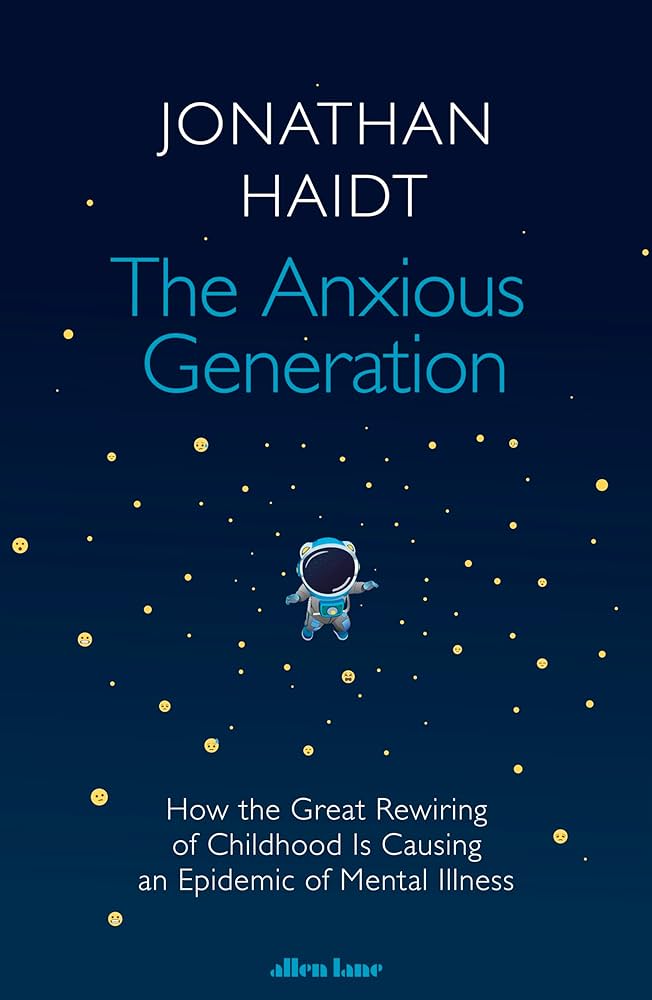
When I read The Anxious Generation, much of it felt familiar.
Not because I had read the research before, but because I had seen it play out in classrooms, playgrounds, and conversations with children year after year. The rising anxiety. The shrinking independence. The way many children seem uncomfortable with boredom, struggle to focus, or feel overwhelmed by everyday challenges.
Jonathan Haidt makes a compelling case that we have underprotected children in the online world and overprotected them in the real one. I think he is right. Social media, constant stimulation, and a lack of boundaries have come at a cost to children’s wellbeing. But I do not think the story ends there.
The problem is real
One of the strengths of The Anxious Generation is its clarity. Haidt does not hedge much. He outlines how a phone-based childhood has changed the way children socialise, take risks, and build resilience. He connects the rise in anxiety and depression to a shift in how childhood itself is structured.
From a teacher’s perspective, this resonates deeply.
- Avoid challenges because failure feels unbearable
- Struggle to sit with discomfort or uncertainty
- Reach for distraction the moment learning becomes hard
These are not character flaws. They are environmental outcomes.
Where I want to build on the idea
It is not just that children are consuming too much content. It is that they are rarely asked to make anything with the tools in front of them. Technology has not only replaced outdoor play or face-to-face interaction. It has replaced long stretches of effort, experimentation, and ownership.
Children have not just lost freedom. They have lost projects.
Creation changes the experience of technology
One thing I see consistently is this: when children use technology to create something, their relationship with it changes.
- They focus for longer than we expect
- They tolerate frustration more willingly
- They feel pride in finishing something
- They stop naturally when the project reaches a pause point
This kind of technology use does not feel anxious or hollow. It feels grounding.
The same device that fuels comparison and scrolling can also support deep focus and satisfaction. The difference is not the screen. It is the role the child plays. Consumer or creator.
Anxiety and agency are connected
When children feel they have little control, little independence, and little ability to shape their world, anxiety grows. When everything happens to them, rather than through them, confidence erodes.
Projects restore agency. They give children something to push against, shape, revise, and complete. They provide small, contained challenges where effort matters and progress is visible.
In other words, they help children experience themselves as capable.
Technology does not have to compete with real life
Used well, it can support collaboration, turn curiosity into action, extend learning beyond the classroom, and connect ideas to tangible outcomes.
The danger is not technology itself. It is technology without purpose.
This is where the digital pantry idea helps. It makes creating easier than consuming by making better tools visible and accessible.
If you are new to this series, the intro post explains the bigger picture behind these reflections.
A way forward
The Anxious Generation does important work by naming the problem clearly. The next step is helping families move forward with confidence rather than fear. Not by banning screens outright. Not by hoping kids will self-regulate in systems designed to keep them scrolling.
But by deliberately shaping environments where making is easier than consuming.
That is where growth happens. That is where resilience is built. That is where technology becomes a tool, not a trap.
Better Tech Kids
These questions are what led me to write Better Tech Kids. It is a practical companion for families who want to move from consumption to creation.