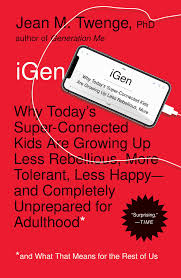
iGen was one of the first books that helped many adults put language to something they were already sensing.
Jean Twenge describes a generation that grew up with smartphones, social media, and constant connectivity as the default. Her research shows clear shifts in how young people communicate, socialise, and experience independence.
When I read iGen, I did not feel surprised. I felt validated. Much of what Twenge describes aligns closely with what I have seen in classrooms over the past decade.
A generation shaped by screens
One of the most striking themes in iGen is how deeply technology has shaped everyday behaviour.
Twenge points to trends such as:
- Less face to face interaction
- Increased loneliness and anxiety
- Delayed independence
- A preference for mediated communication over real world risk
In schools, this often shows up as students who are:
- Hesitant to speak up
- Uncomfortable with unstructured time
- Highly sensitive to social feedback
- Quick to disengage when something feels difficult
Again, this is not a criticism of young people. It is a description of the environment they have grown up in.
Technology is not the enemy
Where I think iGen is most helpful is in making the impact of technology visible.
Where I think it is sometimes misunderstood is in how its conclusions are applied.
It is easy to read iGen and come away with the idea that technology itself is the problem. That screens and real life are in opposition. I do not see it that way.
Technology does not replace real life on its own. It replaces it when it is used only for passive consumption.
Communication has not disappeared. It has shifted
Young people have not stopped communicating. They have changed how they communicate.
- Messages replace conversations
- Posts replace presence
- Reactions replace dialogue
This shift matters. But it does not mean technology cannot support real world connection. It means it needs to be used differently.
When children work together on a shared project using technology, something interesting happens:
- Conversation becomes purposeful
- Collaboration feels natural
- Communication has a goal
Technology stops being a buffer and starts being a bridge.
Creation brings technology back into the real world
The problem described in iGen is not just screen time. It is screen time without output.
Scrolling, watching, and reacting are endless loops. They do not leave anything behind. There is no evidence of effort, no sense of completion, no artefact to reflect on.
Projects change that.
- Build a game
- Record a podcast
- Design something to share
- Make something others can use
Technology becomes connected to real world outcomes. Skills transfer. Confidence grows. And stopping feels easier because there is a natural pause point.
Social media vs shared purpose
iGen highlights how social media can heighten comparison and self consciousness. I see this too.
What I also see is that shared purpose reduces those pressures.
- Attention shifts away from self image
- Feedback becomes useful rather than threatening
- Mistakes feel like part of the process, not a verdict
Creation gives children a different relationship with both technology and each other.
A complementary response
iGen helps us understand what has changed. The next step is deciding how we respond.
For me, that response is not about rejecting technology or trying to rewind the clock. It is about teaching children how to use the tools they already have in ways that support focus, resilience, collaboration, and confidence.
Technology does not have to pull children away from real life. Used well, it can pull them into it.
Where this fits in the bigger picture
iGen names the impact of a consumer driven digital childhood clearly and convincingly.
The work that follows is about rebuilding agency. Helping children move from passive participation to active creation. From reacting to shaping.
That is where technology stops being a problem and starts becoming a possibility.
If you are new to this series, the intro post explains the bigger picture behind these reflections.
The projects post shares why making things gives children a more grounded relationship with screens.
Better Tech Kids
Better Tech Kids is built around small, practical projects that help families turn screens into tools for making.