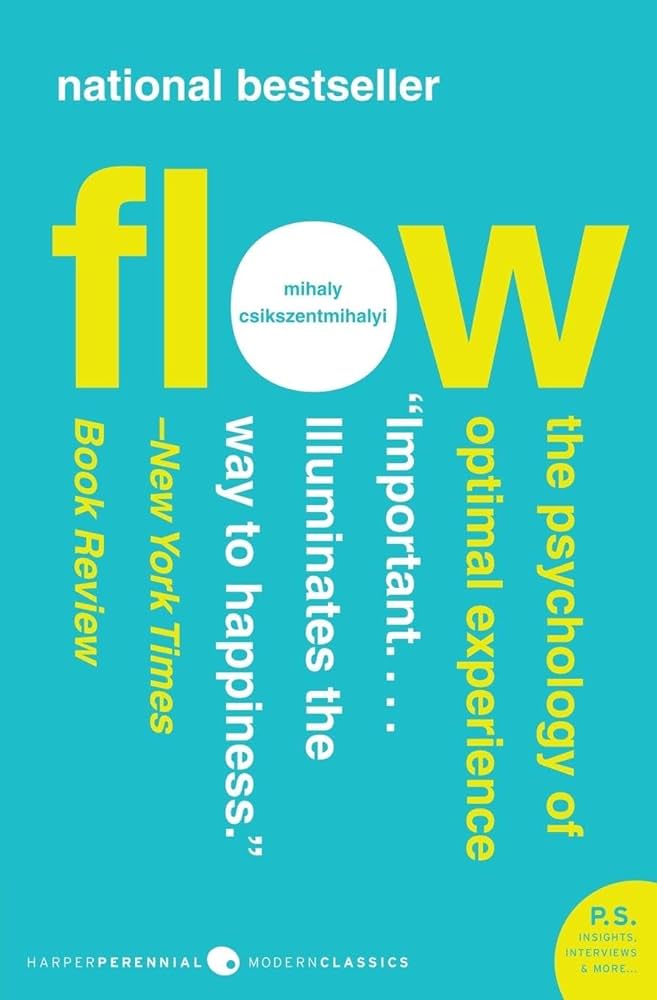
Many people assume children are happiest when they are doing the easiest, most effortless activities possible.
Flow quietly dismantles that idea.
Mihaly Csikszentmihalyi’s research shows that deep satisfaction does not come from passive pleasure. It comes from being fully absorbed in something that is just hard enough to stretch us.
What is flow?
Flow is the mental state where:
- Time seems to disappear
- Attention is fully focused
- Effort feels energising rather than draining
- Challenge and skill are in balance
People often describe it as being in the zone.
Crucially, flow is not about relaxation. It is about engagement.
Why passive screen use rarely creates flow
Many digital experiences are designed to remove friction:
- Endless scrolling
- Autoplay
- Constant novelty
- No clear end
These experiences keep attention, but they do not deepen it.
There is little challenge. No meaningful goal. No sense of completion.
So while they occupy time, they rarely leave children feeling satisfied or proud of what they have done.
Flow lives inside projects
Flow emerges when:
- There is a clear goal
- Progress is visible
- Feedback is immediate
- Effort leads somewhere
This is why projects work so well.
When a child is:
- Building a game
- Editing a podcast
- Animating a story
- Designing something that matters to them
They naturally enter a flow state. They concentrate longer. They persist through difficulty. They forget about time.
Not because they are forced to, but because the work is engaging.
Difficulty is not the enemy
One of the most powerful ideas in Flow is that enjoyment increases with challenge, up to a point.
Too easy leads to boredom. Too hard leads to anxiety. Just right leads to flow.
This explains why children often abandon shallow digital activities quickly, yet stick with difficult creative projects for hours. Struggle is not a sign something is wrong. It is often a sign learning is happening.
Why flow builds confidence
Flow experiences leave a residue.
After finishing a challenging project, children do not just feel entertained. They feel:
- Capable
- Competent
- Proud
These experiences shape identity.
A child who regularly experiences flow starts to see themselves as someone who can focus, persist, and finish things. That belief carries far beyond technology.
The quiet cost of never reaching flow
When children spend most of their digital time in low effort, high stimulation environments, they miss out on something important.
They miss the feeling of:
- Sustained attention
- Earned satisfaction
- Progress through effort
Over time, this can make deeper tasks feel uncomfortable, even though they are ultimately more rewarding.
Designing for flow at home
You do not need perfect conditions.
Flow is more likely when children have:
- Uninterrupted time
- Tools that let them create, not just consume
- Permission to work at their own pace
- Projects that belong to them
Even small changes can make a difference.
Why this matters now
Flow reminds us that the goal is not to make life easier for children. It is to help them experience the kind of effort that feels meaningful.
Technology can absolutely support that, but only when it is used as a tool for making, not just watching. That distinction changes everything.
If you are new to this series, the intro post explains the bigger picture behind these reflections.
The projects post shares why making things gives children a grounded relationship with screens.
Better Tech Kids
Better Tech Kids focuses on projects that are short enough to finish and meaningful enough to create flow for kids.